The Zodiac and the Human Body: How Traditional Medical Astrology Worked In History
The Celestial Nurse
One of the most fascinating features of historical medical astrology was the belief that the zodiac could be mapped onto the human body. This system, often called zodiacal melothesia, connected each of the 12 traditional zodiac signs with particular body regions.
Medical astrologers believed that the human body reflected the greater order of the cosmos. In this worldview, the movements of celestial bodies and the changing positions of the planets were thought to correspond with bodily functions, temperament, and vulnerability to illness.
This concept appeared in ancient medical traditions and remained influential in European medicine for centuries. It was commonly illustrated through the Zodiac Man, a figure whose body was marked with the 12 zodiac signs.
The traditional zodiac-body correspondences
The conventional associations followed a progression from the head down to the feet:
Zodiac sign
Traditionally associated body region
Aries
Head and face
Taurus
Neck and throat
Gemini
Shoulders, arms, and hands
Cancer
Chest, breasts, and stomach
Leo
Heart and upper back
Virgo
Abdomen and intestines
Libra
Lower back and kidneys
Scorpio
Reproductive and excretory organs
Sagittarius
Hips and thighs
Capricorn
Knees, bones, and joints
Aquarius
Ankles and lower legs
Pisces
Feet
These associations varied somewhat among historical authors and traditions. They represent the symbolic framework of traditional astrology, not scientifically established connections between zodiac signs and human anatomy.
In historical practice, medical astrologers sometimes considered a patient’s birth chart, the Moon’s position, planetary configurations, and the astrological conditions of the moment when an illness began. Some used these interpretations to choose purportedly favorable times for treatments.
The belief that celestial patterns could predict illness or determine appropriate medical interventions has not been validated by modern scientific evidence.
Why the Zodiac Man mattered
The Zodiac Man illustrated the belief that the human body was connected to the larger cosmos. It helped practitioners remember the traditional body regions associated with each sign and reflected a broader historical worldview in which nature, astronomy, philosophy, and medicine were closely intertwined.
The diagram is historically significant because it shows how people attempted to organize medical knowledge before modern anatomy, physiology, and clinical research developed.
Today, it is best understood as a historical artifact that reveals how earlier societies interpreted the relationship between humanity and the universe.
8. Where Does Ophiuchus Fit Into the Zodiac-Body Map?
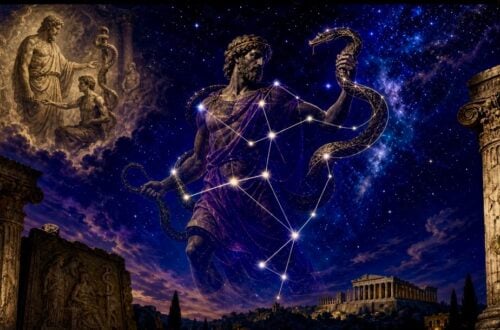
Ophiuchus creates an interesting problem for traditional medical astrology because it is a constellation crossed by the Sun but is not one of the 12 signs used in the conventional zodiac-body system.
In the traditional framework, Scorpio is associated with the reproductive and excretory regions, while Sagittarius is associated with the hips and thighs. Ophiuchus lies in the astronomical region between Scorpius and Sagittarius, but it has no universally established body-part assignment within the traditional 12-sign system.
Some modern writers attempt to extend the zodiac-body map by assigning Ophiuchus a new anatomical region or by giving it an alternative healing-related meaning. These proposals are modern interpretations rather than a single, widely accepted historical tradition.
It is important to distinguish three different ideas:
- Astronomical Ophiuchus: A recognized constellation through which the Sun appears to pass each year.
- Traditional astrological Scorpio and Sagittarius: Signs in a 12-part zodiac system with established symbolic body correspondences.
- Modern 13-sign interpretations: Alternative astrological systems that may assign Ophiuchus its own symbolic characteristics.
These systems use different definitions, so their dates and correspondences should not be treated as interchangeable.
Does Ophiuchus govern a particular organ?
There is no universally accepted traditional medical-astrology correspondence that assigns Ophiuchus a specific organ or body region.
Its modern association with healing comes more directly from its mythological connection to Asclepius, the Greek god of medicine, than from the established zodiac-body map.
This distinction is especially important when discussing medical astrology. A symbolic association with healing does not establish that people born during Ophiuchus’s solar passage have particular medical strengths, weaknesses, or predispositions.
9. The Planets and Medical Astrology: The Historical Role of Celestial Influences
Traditional medical astrology did not rely solely on zodiac signs. Practitioners also interpreted the planets, the Moon, and their relationships to one another.
Different planets were assigned symbolic qualities that were incorporated into historical theories of health and temperament.
For example:
- The Sun was associated with vitality, life force, and the heart in some traditional systems.
- The Moon was connected with bodily fluids, cyclical processes, and change.
- Mercury was associated with the mind, communication, and the nervous system in some astrological traditions.
- Venus was linked with harmony, fertility, and balance.
- Mars was associated with heat, inflammation, conflict, and injury.
- Jupiter was connected with growth, abundance, and expansion.
- Saturn was associated with limitation, aging, chronicity, and structure.
These meanings varied by period, author, and astrological tradition. They should not be interpreted as evidence that planets influence specific organs or cause particular diseases.
Historically, practitioners sometimes combined planetary symbolism with the zodiac signs and the Moon’s position to construct a medical interpretation. Some also used these calculations to select times for treatments.
Modern medicine, however, relies on evidence from anatomy, physiology, laboratory investigations, clinical studies, and other validated diagnostic methods rather than planetary positions.
Ophiuchus and the symbolism of planetary healing
In modern spiritual interpretations, Ophiuchus may be discussed alongside planetary themes of transformation, wisdom, and healing. Some contemporary astrologers connect these ideas with Pluto’s symbolism of transformation or with Jupiter’s traditional associations with growth and knowledge.
Such connections are interpretive choices, not established rules of astronomy or a universally recognized system of Ophiuchus medical astrology.
For a responsible article, it is useful to describe them as modern symbolic interpretations rather than historical facts shared by all medical astrologers.
10. The Difference Between Medical Astrology and Modern Medicine
The history of medical astrology offers a window into the evolution of medical thought. For centuries, people sought to understand illness through the intellectual frameworks available to them, including observations of the sky, traditional philosophy, and early natural science.
Modern medicine has developed different methods for investigating health. It evaluates proposed explanations through systematic observation, controlled studies where appropriate, reproducible evidence, and clinical testing.
There is no reliable scientific evidence that zodiac signs or planetary configurations can diagnose medical conditions, identify an individual’s disease risk, or determine the best treatment.
For that reason, the zodiac-body map and planetary associations are most appropriately explored as historical and cultural subjects.
Readers who find Ophiuchus meaningful as a symbol of healing can still use its mythology as inspiration for reflection, compassion, and a commitment to learning about health. When symptoms or medical concerns arise, however, decisions about diagnosis and treatment should be made with qualified healthcare professionals.
The enduring value of Ophiuchus lies in its ability to connect ancient stories about healing with contemporary questions about knowledge, responsibility, and the human desire to understand the body.
Disclaimer: Astrology, Medical Information, and Spiritual Interpretation
The information presented in this article about Ophiuchus, astrology, medical astrology, mythology, and spiritual symbolism is intended for educational, historical, cultural, and entertainment purposes only. Astrological interpretations and spiritual associations reflect traditional beliefs or modern symbolic perspectives and should not be considered scientifically established facts.
Medical astrology is not a scientifically validated method of diagnosing, preventing, treating, or predicting illness. References to zodiac signs, planetary influences, bodily systems, healing energies, or celestial correspondences are not medical assessments and should not be used to determine an individual’s health status or medical needs.
This article does not constitute medical advice, diagnosis, or treatment, nor does it replace consultation with a qualified healthcare professional. Always seek appropriate professional medical guidance regarding symptoms, health concerns, medications, or treatment decisions. Never delay, discontinue, or substitute evidence-based medical care based on astrological interpretations or spiritual practices.
Spiritual reflection and symbolic traditions may offer personal meaning or inspiration, but individual interpretations vary, and no particular health outcome is guaranteed. Readers are encouraged to approach these subjects with curiosity, critical thinking, and respect for the distinction between historical belief, personal spirituality, and scientific evidence.
By reading this article, you acknowledge that the content is intended for general informational purposes and that responsibility for personal health decisions should be guided by qualified healthcare professionals and reliable medical evidence.

You May Also Like

Your June Wellness Forecast: Astrology, Herbs, and Healing
Ophiuchus: The 13th Zodiac Constellation, Ancient Healing Wisdom, Spiritual Symbolism, and Medical Astrology

