China Is Turning DNA Into Computer Storage: Could the Molecule of Life Transform the Future of Medicine?
Scientists are developing a revolutionary technology that uses synthetic DNA to store photographs, documents, videos and potentially enormous quantities of human knowledge. What does this mean for biotechnology, medicine and the future of information storage?
For billions of years, DNA has served as nature’s information-storage system. It carries the genetic instructions that make life possible, from the smallest microorganisms to the human body.
Now, scientists are finding a way to use that same biological molecule for something entirely different: storing computer information.
Researchers in China are developing DNA-based data storage systems that could eventually hold extraordinary quantities of digital information in remarkably small amounts of physical space.
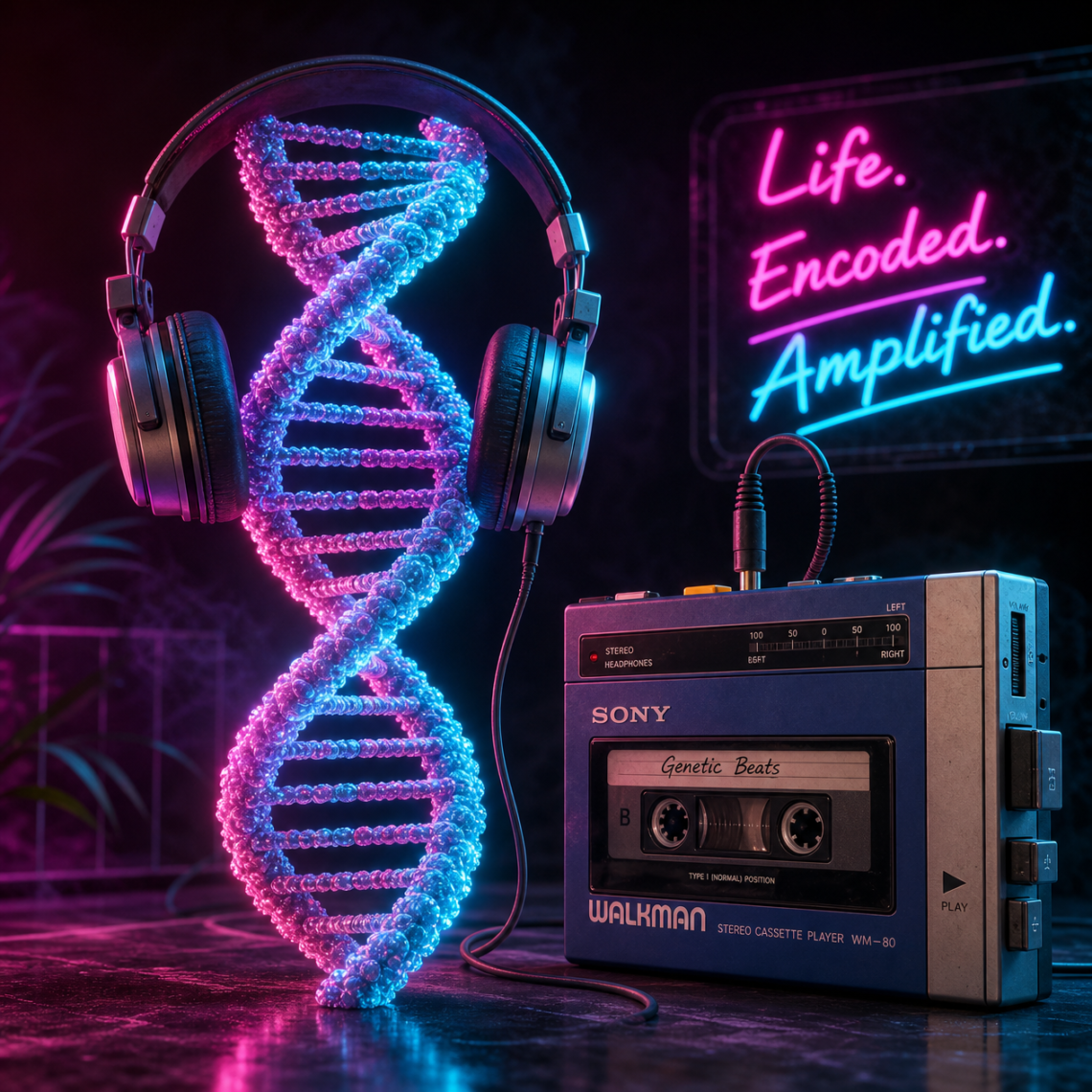
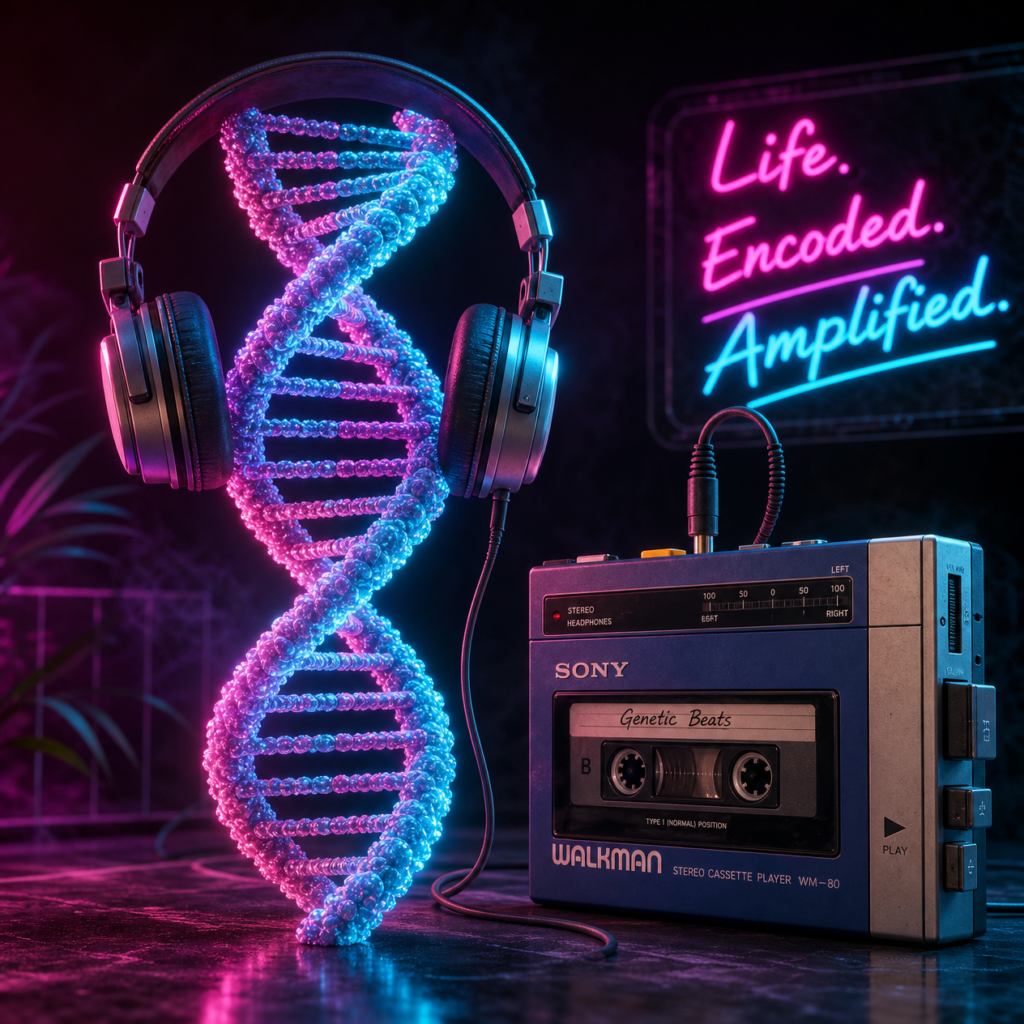
And one of the most intriguing developments resembles something many people remember from decades ago: the cassette tape.
From Magnetic Tape to DNA
Traditional computer storage relies on magnetic materials, electrical charges or semiconductor technology. DNA storage takes a completely different approach.
DNA contains four chemical building blocks, represented by the letters A, T, C and G:
- Adenine (A)
- Thymine (T)
- Cytosine (C)
- Guanine (G)
These four building blocks form a chemical alphabet.
Computers normally encode information using combinations of zeros and ones. DNA storage systems translate those digital instructions into sequences of A, T, C and G.
Scientists then chemically synthesize the corresponding DNA molecules and preserve them for future retrieval.
When the information is needed, specialized sequencing equipment reads the DNA sequence and computer software converts it back into its original digital format.
A photograph, document or video can theoretically be stored this way.
China’s DNA Cassette Technology
One particularly interesting development involves researchers working on DNA-based tape storage.
Rather than simply keeping DNA in laboratory tubes, researchers are investigating ways to organize synthetic DNA on physical storage materials.
The concept resembles traditional magnetic tape storage, but the information is encoded chemically rather than magnetically.
Some proposed DNA storage systems offer theoretical capacities that are almost difficult to comprehend.
DNA’s information density could eventually allow enormous archives to be stored in extraordinarily small physical spaces.
This could be especially valuable for preserving medical research, historical records, scientific discoveries and other information that society may need to retain for generations.
Why This Matters to Medicine
The implications extend beyond computer technology.
Modern medicine increasingly depends on enormous amounts of biological information.
Genomic sequencing, personalized medicine, disease research, pharmaceutical development and molecular diagnostics all generate enormous datasets.
DNA-based information storage could eventually provide a way to preserve these records for very long periods.
Imagine future medical archives containing genetic research, historical disease records and scientific discoveries preserved in compact DNA storage systems.
Such technology could become particularly useful for institutions that need to maintain valuable scientific information over decades or centuries.
Is DNA Storage the Same as Genetic Engineering?
No.
This distinction is important.
The DNA used for information storage is generally synthetic DNA designed to encode digital information. It is not necessarily intended to function as a living organism’s genetic instructions.
Storing a photograph in synthetic DNA does not mean that the photograph becomes a living thing, nor does it mean that the DNA will produce an organism.
It is a chemical information-storage medium.
Nevertheless, the technology demonstrates just how versatile DNA can be when scientists learn to work with its molecular structure.
A New Frontier in Biological Technology
The development of DNA data storage raises some fascinating questions about the future.
Could biological molecules eventually become a major part of the world’s information infrastructure?
Could medical institutions preserve vast genetic and scientific databases in tiny storage systems?
Could DNA-based technologies eventually contribute to more sophisticated approaches to personalized medicine?
These possibilities remain areas for research rather than established medical applications.
But one thing is clear: DNA is no longer being studied solely as the blueprint of life. Scientists are also learning to use it as a medium for preserving information.
The molecule that carries the history of biological life may one day help preserve the history of human civilization.
The future of biotechnology may involve not only understanding the information contained in DNA, but learning how to use DNA itself to preserve the information we create.
Scientific References and Further Reading
1. A Compact Cassette Tape for DNA-Based Data Storage
Science Advances, September 10, 2025.
Original research describing China’s DNA cassette storage technology, including its physical tape design, DNA storage compartments and information retrieval system.
2. Cost-Effective DNA Storage System with DNA Movable Type
Advanced Science, November 18, 2024.
Research describing China’s Bi Sheng-1 DNA information-storage system, which uses reusable DNA building blocks to encode digital information.
3. High-Throughput DNA Synthesis for Data Storage
Chemical Society Reviews, March 2024.
A scientific review examining DNA synthesis technologies and how digital information can be converted into synthetic DNA sequences.
4. Efficient Data Reconstruction: The Bottleneck of Large-Scale Application of DNA Storage
Scientific review, 2024.
Examines the technical challenges involved in retrieving, decoding and reconstructing digital information stored in DNA.
Note: These references include original experimental research and scientific reviews. The technologies described are developing research applications, and theoretical storage capacities should not be confused with demonstrated commercial capabilities.
