Calendula: The Golden Flower of the Sun
Exploring the healing traditions, herbal medicine, and planetary magic of Calendula officinalis
🌼 A flower of warmth, renewal, and restoration.
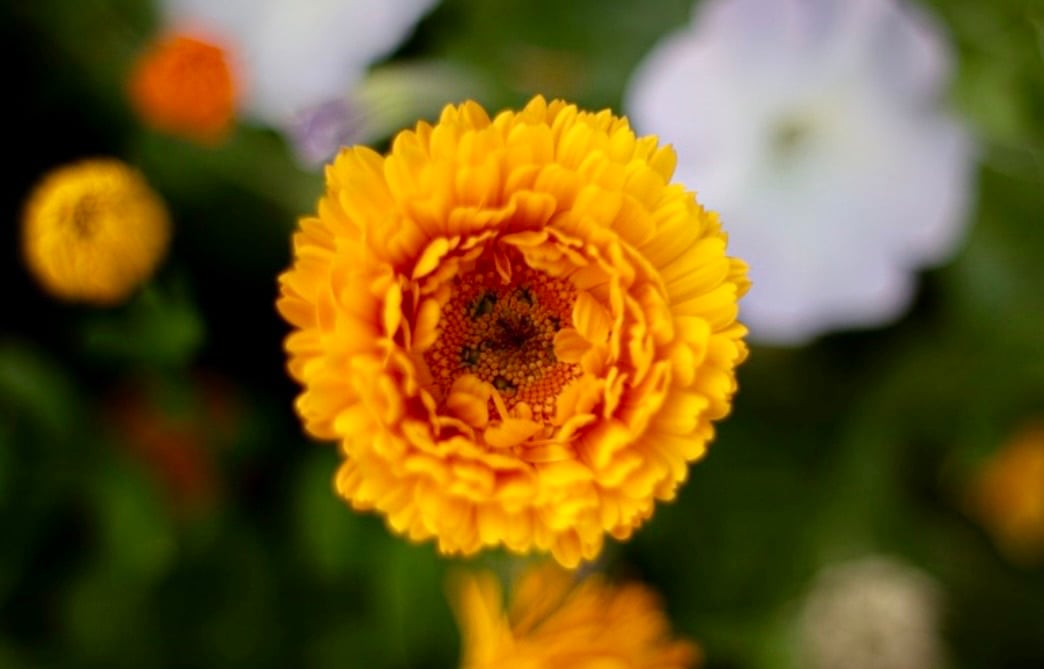
There is something beautifully radiant about calendula. With its golden-yellow and deep orange blossoms, this humble garden flower has earned a special place in traditional herbal medicine, botanical history, and planetary herbalism.
Known as Calendula officinalis, or pot marigold, calendula has been cultivated for centuries. Its vibrant flowers have been used in traditional preparations for the skin, minor wounds, and other everyday ailments. But beyond its practical herbal uses, calendula carries a fascinating symbolic connection to the Sun.
Let’s explore this golden flower through the lens of herbal medicine, botanical wisdom, and medical astrology.
🌿 Getting to Know Calendula
Calendula belongs to the Asteraceae family, the same botanical family as daisies and sunflowers.
It is an annual flowering herb with bright yellow, golden, and orange blossoms. It generally grows between 12 and 24 inches tall, depending on the variety and growing conditions.
Calendula thrives in:
- Full sun to partial shade.
- Well-draining soil.
- Moderate, consistent watering.
- Cool-to-mild growing conditions.
It is relatively easy to grow from seed and can bloom throughout the growing season. Its flowers also attract beneficial pollinators.
One interesting characteristic is that its flower heads open and close in response to changing light conditions, adding to its traditional association with the Sun.
A little botanical distinction: Calendula is often called pot marigold, but it is not the same plant as the common ornamental marigolds belonging to the Tagetes genus.
🌼 The Healing Properties of Calendula
Calendula has a long history of use in traditional herbal medicine, particularly for supporting the skin.
Its flowers contain several interesting plant constituents, including:
- Flavonoids
- Triterpenoids
- Carotenoids
- Saponins
These compounds have been studied for their antioxidant and anti-inflammatory activities.
1. Skin Support and Restoration
One of calendula’s best-known traditional applications is topical skin care.
It has traditionally been used in preparations for:
- Dry and irritated skin.
- Minor cuts and scrapes.
- Minor superficial wounds.
- Minor skin inflammation.
- Chapped and rough skin.
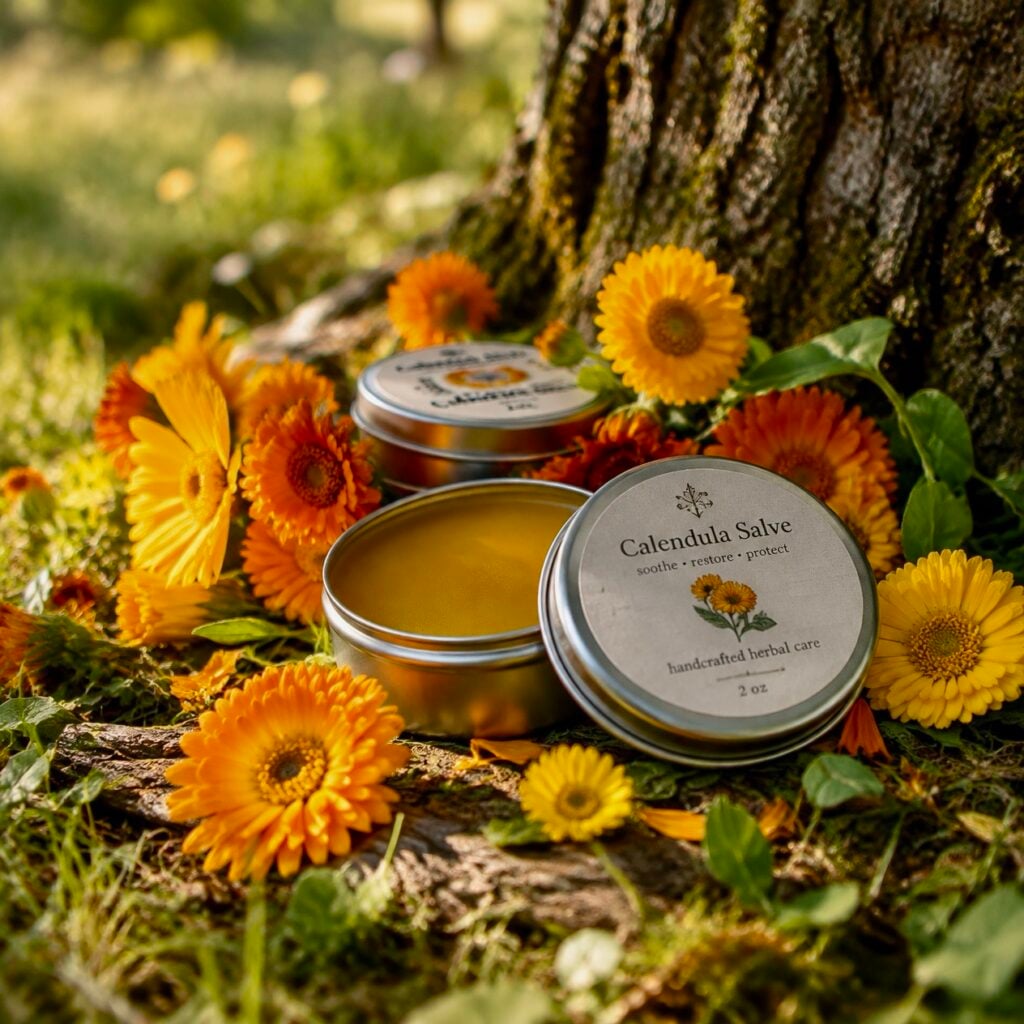
Calendula-infused oils, creams, and salves are popular ways of incorporating the flower into natural skin care.
The European Medicines Agency recognizes certain calendula flower preparations for traditional use in minor skin inflammation and minor wounds. However, this recognition is based on longstanding traditional use rather than conclusive clinical evidence.
2. Anti-Inflammatory Properties
Research has identified anti-inflammatory activity in certain calendula extracts.
Its flavonoids and triterpenoids are among the constituents being investigated for their biological activity.
Although laboratory and some clinical research are promising, more high-quality human studies are needed to establish how effective calendula is for particular conditions.
3. Antioxidant Properties
Calendula contains carotenoids and flavonoids, plant compounds associated with antioxidant activity.
Antioxidants help protect cells from oxidative damage in biological systems.
This is one reason calendula continues to attract interest in botanical research and natural skin-care formulations.
4. Traditional Antimicrobial Applications
Laboratory studies suggest that certain calendula extracts may have activity against some microorganisms.
However, this does not mean calendula can replace antimicrobial medications or treat an infection.
5. Traditional Digestive Applications
Calendula has also appeared in traditional herbal preparations for digestive complaints.
Its historical use is interesting, but there is insufficient clinical evidence to establish its effectiveness for digestive conditions.
It is important to distinguish traditional use from proven therapeutic benefit.
☀️ Calendula and Medical Astrology
Now we enter one of my favorite aspects of herbalism: the relationship between plants and planetary energies.
In traditional planetary herbalism, calendula is commonly associated with the Sun.
Its golden-orange blossoms naturally evoke solar symbolism: warmth, light, vitality, illumination, and regeneration.
In some astrological herbal traditions, calendula is also associated with Leo, the zodiac sign ruled by the Sun.
Calendula’s Planetary Correspondences
Correspondence
Traditional association
Planet
Sun
Zodiac sign
Leo
Element
Fire
Nature
Warm and dry
Metal
Gold
Symbolism
Vitality and renewal
Solar qualities
Warmth, courage and illumination
These correspondences belong to traditional astrological herbalism, and associations can vary between historical systems.
Why Is Calendula Considered a Solar Herb?
The Doctrine of Signatures is an old herbal philosophy that interprets a plant’s appearance, color, shape, or growth patterns as symbolic clues to its traditional uses.
Calendula’s golden flowers resemble the Sun.
Its bright blossoms, warm colors, and relationship with sunlight made it a natural candidate for solar symbolism.
Within this tradition, the Sun represents:
- Vitality and life force.
- Warmth and illumination.
- Strength and regeneration.
- The heart as a symbol of life and courage.
- Personal confidence and radiance.
These are symbolic associations, not evidence that calendula treats heart or circulatory conditions.
Calendula and Leo
Leo is traditionally associated with the heart, courage, creativity, and self-expression.
Because Leo is ruled by the Sun, calendula’s association with this sign makes sense within planetary herbalism.
Its golden flowers are often interpreted as representing the warmth and restorative symbolism of solar energy.
🌞 Calendula and the Seven Planetary Herbs
In traditional astrological herbalism, plants are sometimes classified according to the seven classical planetary rulers.
The planetary system includes:
- Sun — vitality, illumination, and life force.
- Moon — nourishment, moisture, and cycles.
- Mercury — communication, movement, and adaptability.
- Venus — beauty, harmony, and affection.
- Mars — strength, heat, and action.
- Jupiter — expansion, abundance, and growth.
- Saturn — structure, boundaries, and longevity.
Calendula is generally placed under the Sun in this system.
Planetary rulership is a traditional symbolic classification, rather than a scientifically established botanical property.
🌿 Traditional Ways to Work With Calendula
Calendula can be incorporated into herbal preparations in several ways.
Calendula-infused oil
Dried calendula flowers can be infused into a carrier oil to create a botanical oil traditionally used for moisturizing and soothing the skin.
Calendula salve
Calendula-infused oil can be combined with beeswax to create a traditional skin salve for dry or chapped skin and minor superficial irritation.
Dried calendula flowers
The petals can be dried and stored for botanical projects, culinary decoration, and traditional herbal preparations.
Calendula tea
Calendula has a history of use in herbal infusions. The European Medicines Agency also describes traditional preparations for mouth and throat rinses and gargles. This should not be interpreted as evidence that drinking calendula tea treats digestive or other medical conditions.
Always use correctly identified, food-grade flowers intended for the preparation.
🌱 Growing Your Own Solar Herb
Calendula is a wonderful addition to an herbal garden.
It is relatively easy to grow from seed and prefers full sun, well-draining soil, and regular but moderate watering.
A few growing tips:
- Sow seeds in early spring when conditions are suitable.
- Plant approximately ¼ inch deep.
- Give plants room for airflow and growth.
- Water consistently without keeping the soil waterlogged.
- Harvest flower heads when they are fully open.
- Dry flowers in a well-ventilated area away from direct sunlight.
- Store thoroughly dried flowers in an airtight container away from heat and moisture.
Calendula can also self-seed, making it a lovely recurring addition to the garden.
✨ The Golden Wisdom of Calendula
What I find particularly beautiful about calendula is the way it bridges the worlds of botanical knowledge and traditional symbolism.
On one hand, we have a flowering plant with interesting phytochemistry and a long history of topical herbal use.
On the other, we have its solar symbolism: golden petals, warmth, vitality, and renewal.
In planetary herbalism, calendula reminds us of the Sun’s archetypal qualities — illumination, courage, strength, and the energy that encourages life to flourish.
Whether you grow it in your garden, incorporate it into natural skin-care preparations, or simply admire its brilliant blossoms, calendula offers a wonderful opportunity to reconnect with the traditional wisdom of plants.
Sometimes the simplest flowers carry the richest stories.
May we continue to learn from the plants, respect their traditions, and approach their healing potential with curiosity, discernment, and care. 🌼☀️
References & Further Reading
The following resources offer botanical, historical, and scientific information about calendula.
- European Medicines Agency — Calendula Flower: Summary for the Public.
Information about traditional medicinal uses, evidence, and safety.
https://www.ema.europa.eu/en/documents/herbal-summary/calendula-flower-summary-public_en.pdf - European Medicines Agency — Calendula officinalis Herbal Medicinal Product.
Herbal monographs, assessment reports, and regulatory information.
https://www.ema.europa.eu/en/medicines/herbal/calendulae-flos - Leach, M. J. — Calendula officinalis and Wound Healing: A Systematic Review.
Wounds, 2008.
https://pubmed.ncbi.nlm.nih.gov/25941793/ - A Systematic Review of Calendula officinalis Extract for Wound Healing.
Wound Healing Society, 2019.
https://pubmed.ncbi.nlm.nih.gov/31145533/ - University of New Hampshire Cooperative Extension — How to Grow Calendula.
Botanical description and cultivation guidance.
https://extension.unh.edu/resource/how-grow-calendula-calendula-officinalis - Utah State University Extension — Calendula in the Garden.
Growing, harvesting, and traditional uses.
https://extension.usu.edu/yardandgarden/research/calendula-in-the-garden
Disclaimer
This article is intended for educational and informational purposes only. It explores traditional herbal medicine, botanical research, and historical astrological associations. It is not intended to diagnose, treat, cure, or prevent any disease, nor is it a substitute for professional medical advice.
Although calendula has a history of traditional use, clinical evidence supporting many of its medicinal applications remains limited. Calendula may cause allergic reactions, particularly in individuals sensitive to plants in the Asteraceae (daisy) family. Consult a qualified healthcare professional before using calendula medicinally, particularly during pregnancy or breastfeeding, or if you have an existing medical condition. Do not use herbal preparations as a substitute for appropriate medical treatment.
Astrological and planetary correspondences are presented as traditional symbolic interpretations and are not scientifically established medical principles.
Honor the plants, respect the science, and always use herbal medicine responsibly. 🌿

You May Also Like

When the OuterPlanets Turn Inward
The Aquarius Moon: Meaning, Body Associations, and Letting Go